Continued Progress on the 2nd floor addition. . . .

2nd floor - looking West
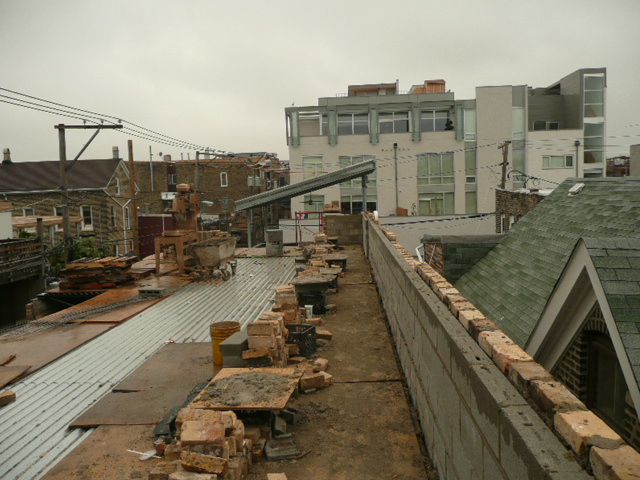
A wall rises
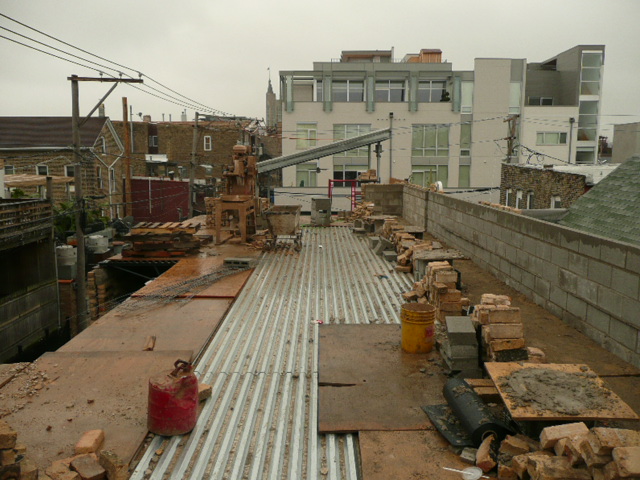
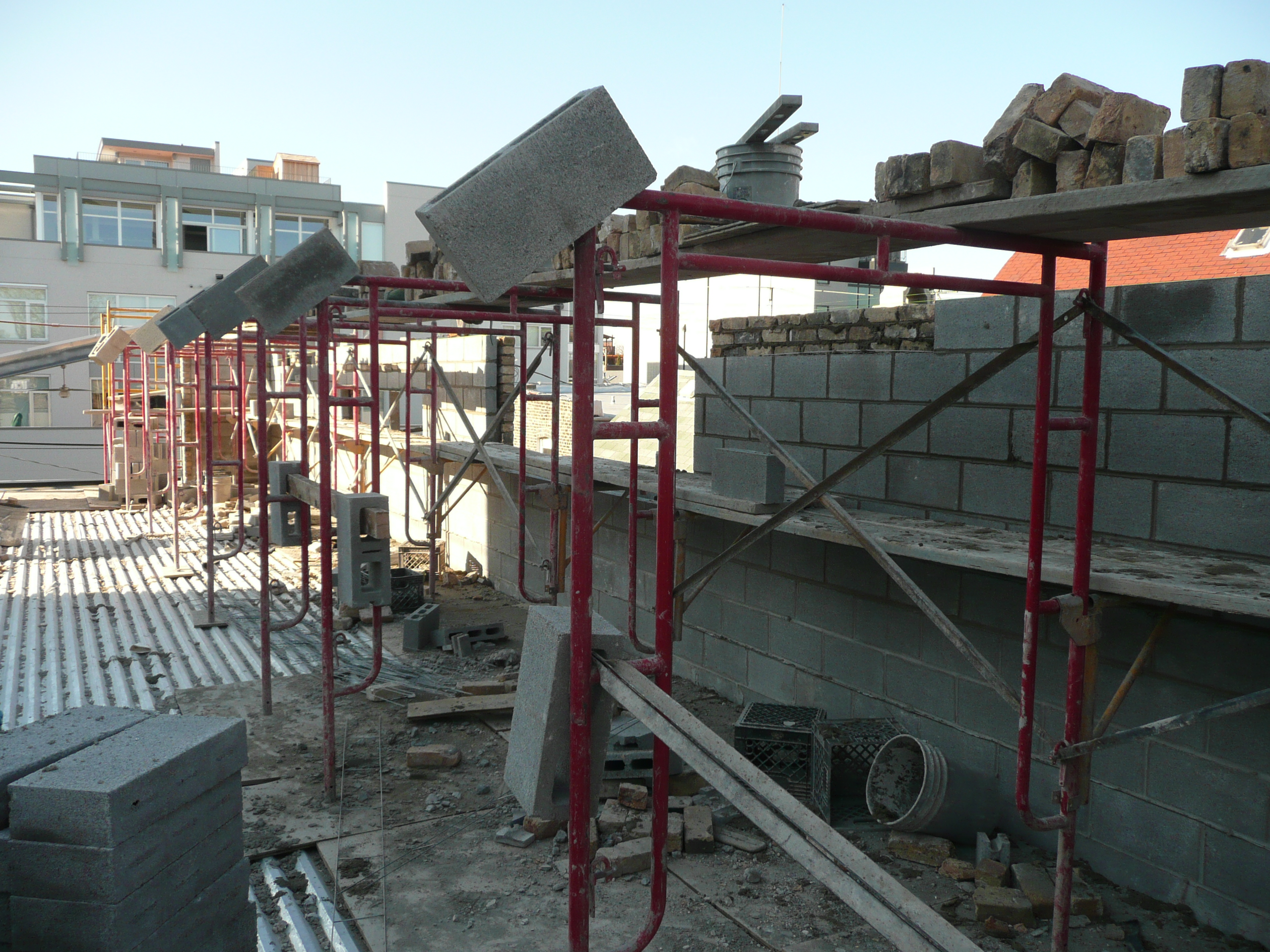
More to come
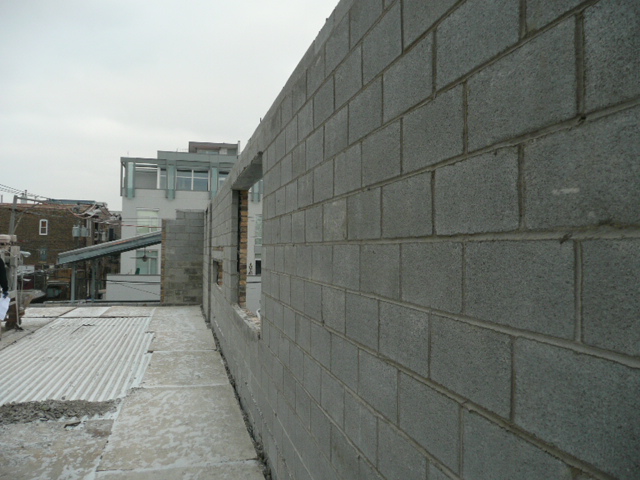
The finished product
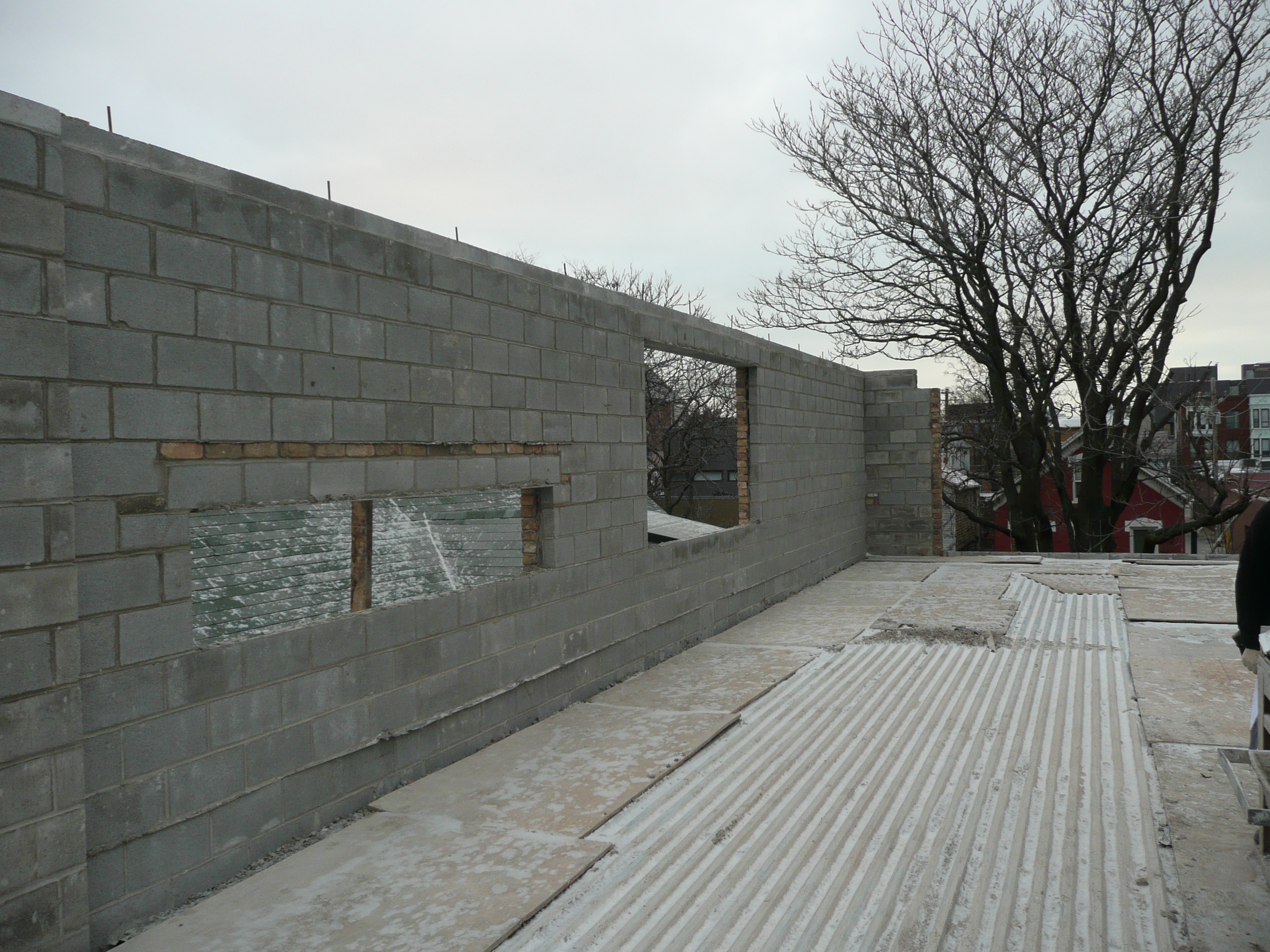
The view west
Continued Progress on the 2nd floor addition. . . .
2nd floor - looking West
A wall rises
More to come
The finished product
The view west
 Leave a Comment » |
  1 |
1 |  Permalink
 Posted by elementalbuilding

Woytek in charge!
The steel deck for the second floor went in. Soon walls will rise, then the roof will go on, and then we’ll have a completed envelope.

How do you fit 21 ft beams into a 16 ft alley?
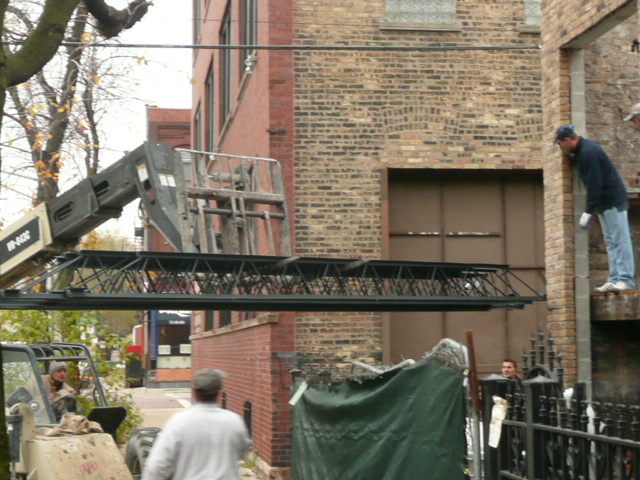
Vladimir gets ready for the beams
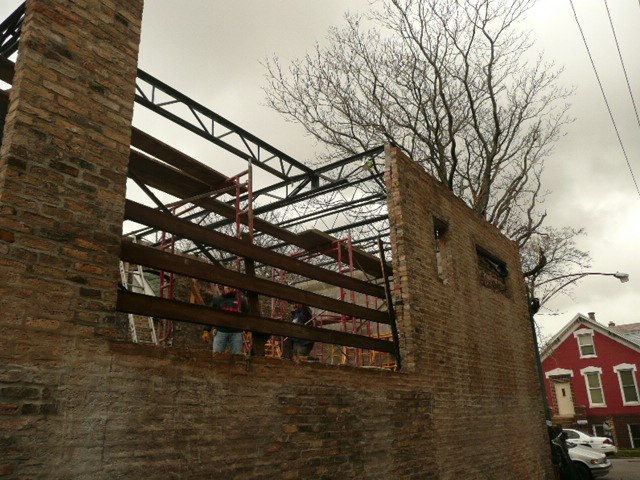
The South Facade, Looking East
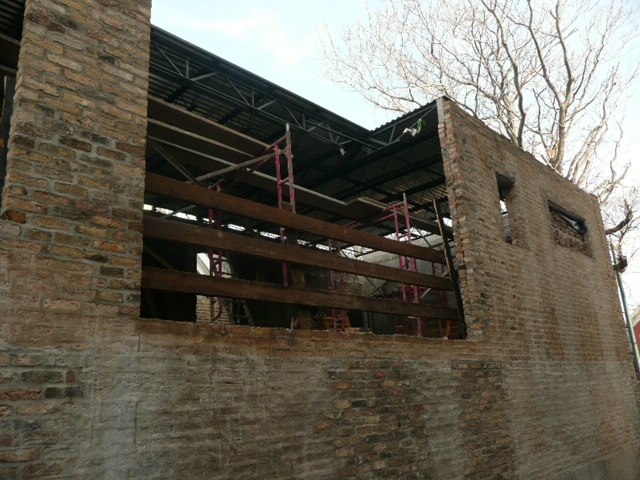
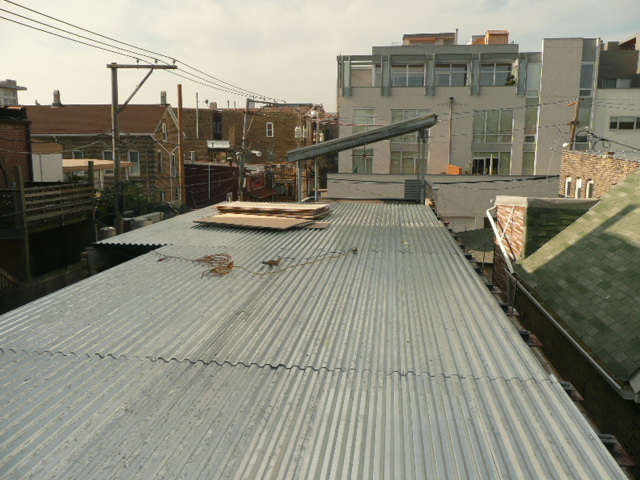
Looking West: Foreground to background-the future living room, dining room, kitchen, with Chicago's greenest garage in the back-background.
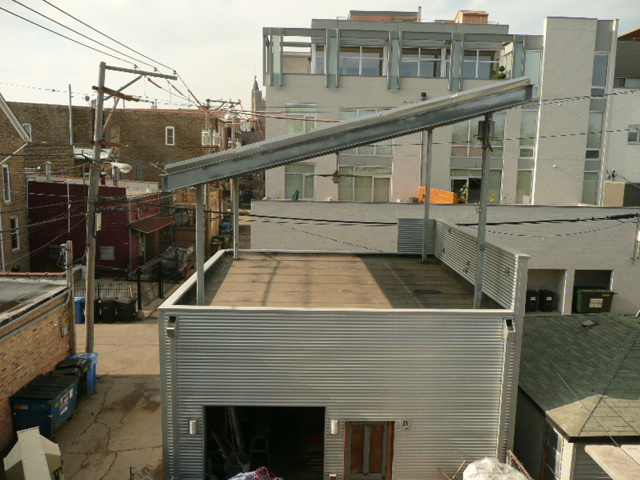
View from the future kitchen of the future rooftop deck
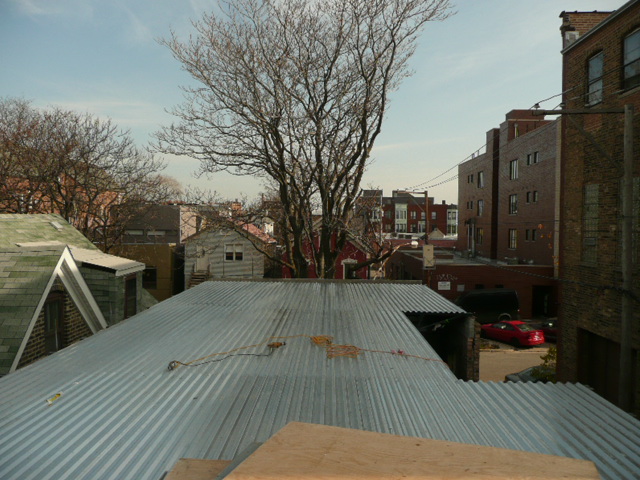
Looking East: Foreground to Background-Kitchen, Dining Room, Living Room
Not to be confused with Soylent Green (or should it?!)
The house is now officially registered with the USGBC, and the City of Chicago Green Permit program.
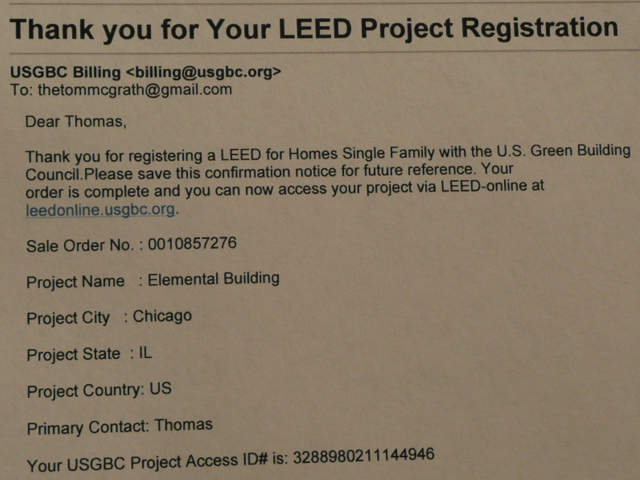
The official email
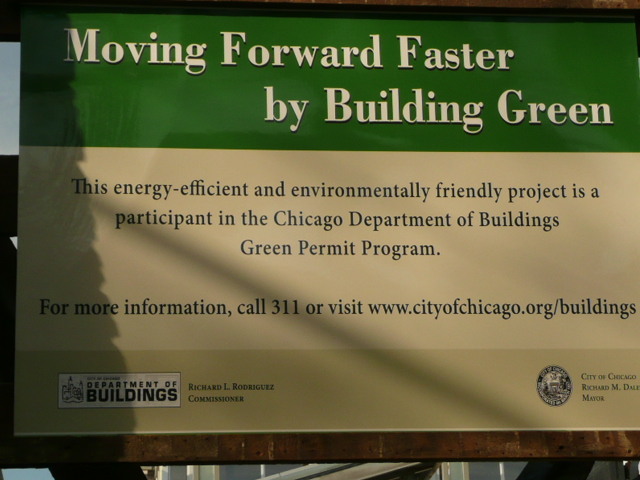
The City's official sign
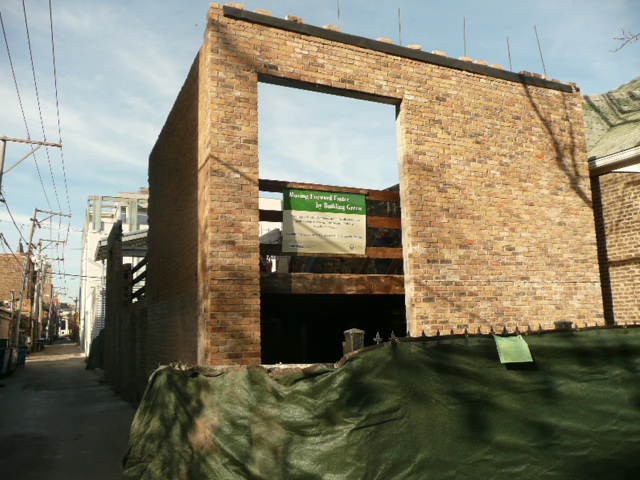
A home, and its sign
The project is projected to be the highest of both group’s ranking systems (Platinum for the USGBC/LEED, and 3-star for the City) Now we just need to build it!
USGBC is one of the biggest players in the green building industry and is composed of architects, builders, engineers, real-estate professionals, landscape professionals and many other trades people. For the past 17 years it has worked to establish a 3rd party independent standard for green building. There are almost 10,000 building professionals who are members of the USGBC and it has many supporters. It does however have its share of detractors as well. Like this guy. Some people fault the system for being more about chasing points than for being about sound ecological construction. Others complain that the system doesn’t do a good job of rewarding the right things.
I believe that it’s an important organization which has developed one of the first comprehensive systems for defining what components should go into green building and a scale for determining ‘how green a building is’ relative to others. It’s not perfect but it is a huge step in the right direction- and it is an organization that continues to evolve its standards based upon input and consensus of the building professionals who work at the front lines of design and construction.
In much the same way as the USDA definition of ‘organic’ is far from perfect (if there are any doubts about this please read Michael Pollan’s seminal work “The Omnivores Dilemma“), it is a step in the right direction. As prevalent as ‘greenwashing’ (the masking of poor ecological products with the veil of something sustainable) is today it would probably be worse with out organizations such as the USGBC.
Leave a Comment » | 1 | Permalink
Posted by elementalbuilding
It might be surprising to you that residential space and water heating account for more than 50% of the average household energy and produce more greenhouse gases than the average car. For this reason, Elemental Buildings is investing a good amount of its resources into wall and window insulation to reduce the amount of energy required to heat and cool a home. However, an equally important consideration is choosing the heating system to heat the home.
Recently, I wrote a letter to the editors of Environmental Building News regarding the use of heat pumps in residential homes. While heat pumps have gained great popularity as ‘green’ sources of heating and cooling the home, I am convinced that they aren’t the most efficient method of heating. I thought I’d take this opportunity to expand upon this letter and explain why I’m choosing to go with natural gas for water and ambient heat.
Heat pumps can be used as hot water heaters, or to heat the ambient air inside your home during winter. Some people call it ‘free heat from the ground’, others say you are simply moving (pumping) heat from one place to another. In some ways this is true. Heat pumps work because all objects, both hot and cold, contain thermal energy. Consequently, you can take the energy out of the cold objects (to make them colder) and give them to the hot objects (to make them hotter). A heat pump is an anti-Robinhood. It steals from the thermally poor and gives to the thermally rich.
It might be easier to think about this in terms of an object you use every day – the air conditioner. An air conditioner cools your house by transferring thermal energy from the air inside your house (in effect slowing down how fast the air molecules zip through the air) to the air outside your house. If you ever stand outside the exhaust from an AC outlet, you can feel how hot the air can get.
Of course it isn’t free to run your air conditioner. An AC unit transfers heat from inside to outside by successively compressing and expanding a gas (what used to be Freon) in a closed loop between the inside and outside of the house. The energetic cost is the amount of electrical energy required to run this closed loop. This electrical energy can be compared to the thermal energy transferred between the inside and outside of the home. This is called the coefficient of performance or COP.
The COP for a heat pump is around 3.5. This means that the heat pump transfers 3.5 kilowatt-hours of heat energy into the home for every kilowatt-hour of electrical energy it uses. Sounds pretty good, huh? Compared to an electrical heater it is. The COP for an electrical heater is less than 1. In an electrical heater, electrical energy is converted directly into thermal energy (by running it through a resistor, for example) with a little bit of wasted energy to create things like light (your electric stove glows when it’s hot, right?). So an electrical heater can transfer less than 1 kilowatt-hour of thermal energy for every kilowatt-hour of electrical energy it takes to run it.
So why not use a heat pump? While it seems incredibly efficient, it really isn’t. A heat pump requires electricity to run and generating electricity is incredibly inefficient. You can’t just ignore the wasted energy and greenhouse gases produced by making electricity. In America, most electricity comes from burning coal. This produces steam, which turns a turbine to generate electricity. Only 30% of the energy from burning coal actually gets converted into electricity; the other 70% is released into the environment as wasted heat . But this heat is exactly what we need! If we burned the fossil fuel in our house, we wouldn’t be wasting the heat into the environment.
This is why it still makes sense to use natural gas to heat your home. If you run the numbers, the greenhouse gases produced to produce the electricity to run heat pumps is higher than the greenhouse gases produced by burning natural gas to heat a house. This ignores the additional energetic costs in digging a large hole in the ground as a heat sink and the extra expense in purchasing the heat pump.
One day it might make more sense to use heat pumps. In England, research is being done to run heat pumps without using electricity (article). Secondly, as we transition to using solar and wind to generate electricity, we will no longer be producing greenhouse gases to make electricity. In some areas of the country where renewable resources are more popular (such the Northwest, where > 50% of electricity is generated by hydroelectric), it makes more sense to use heat pumps. Which brings us back to another point Elemental Building believes in – going green requires local solutions to each problem.
3 Comments | 1 | Permalink
Posted by elementalbuilding
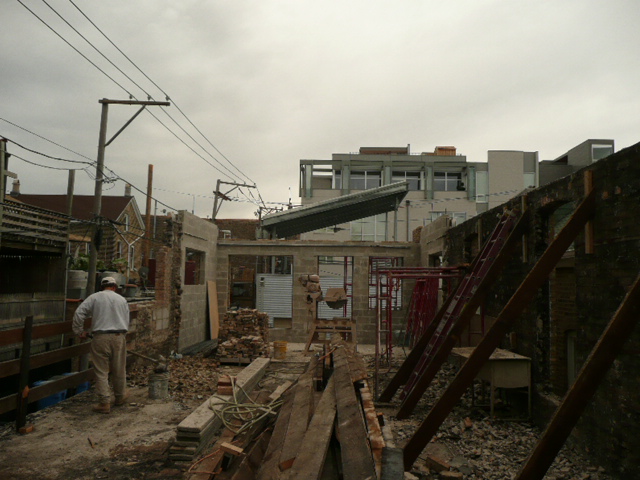
Looking West (The Greenest Garage in Chicago can be seen in the background)
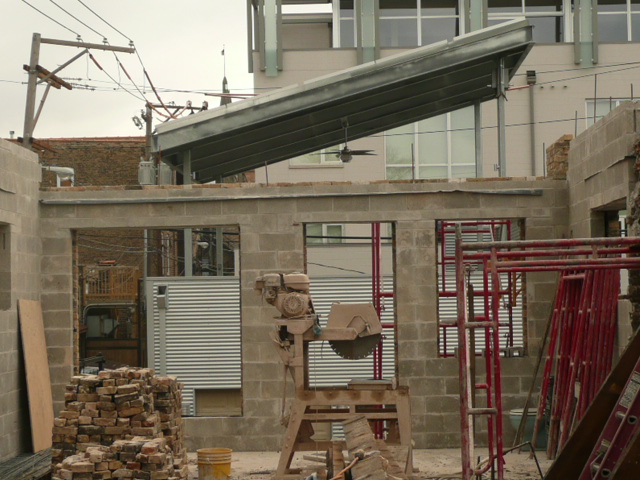
The future master bedroom
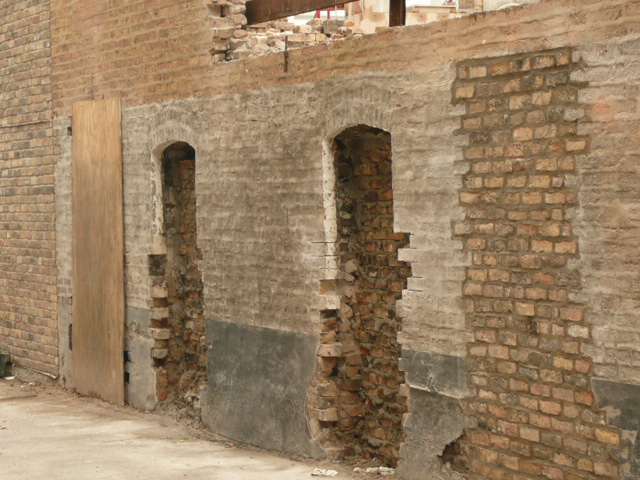
Old windows get bricked in

Original South Facade (notice the windows)
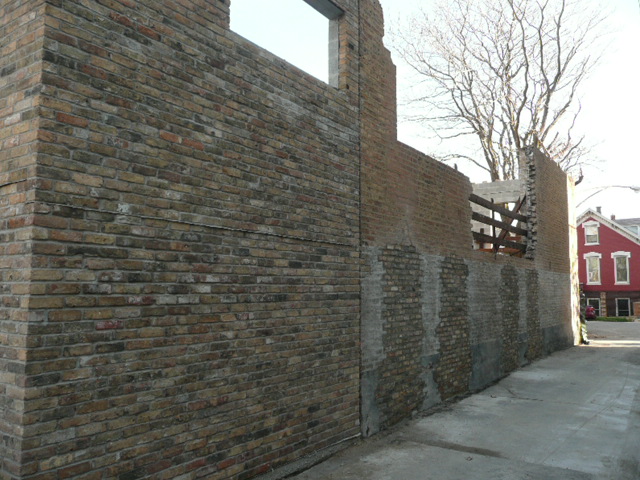
South Facade 11-09 (basement windows bricked in) (roof - gone)
Leave a Comment » | 1 | Permalink
Posted by elementalbuilding
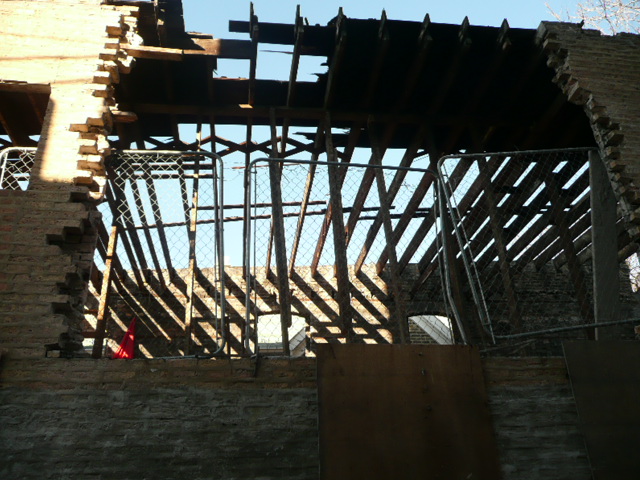
The new open roof- as seen throught the future curtain wall
Work begins on removing the roof to make room for the new steel joists that will support the new second floor addition.
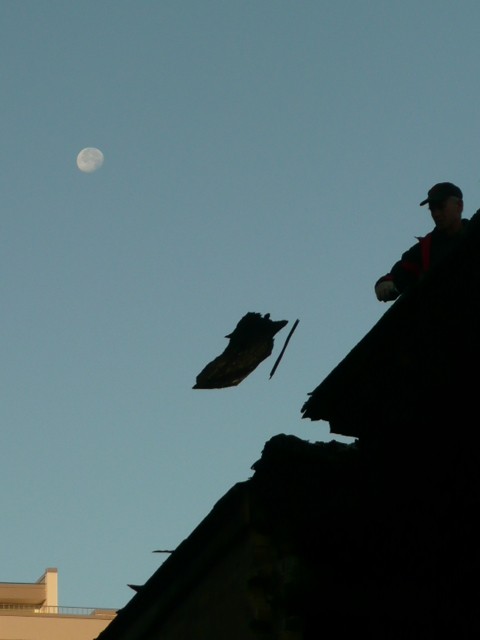
SLowak tosses pieces of the old roof off as the moon looks on

The carnage of Hurricane Slowak

Slowak, Tony, and Bohdan clean up the mess.
Leave a Comment » | 1 | Permalink
Posted by elementalbuilding
A nice article came out in Chicago Architecture Today about the house.
Plus work continues on replacing the old wood/aluminum sided house with brick and on opening up the side of the house for the new glass curtain wall.
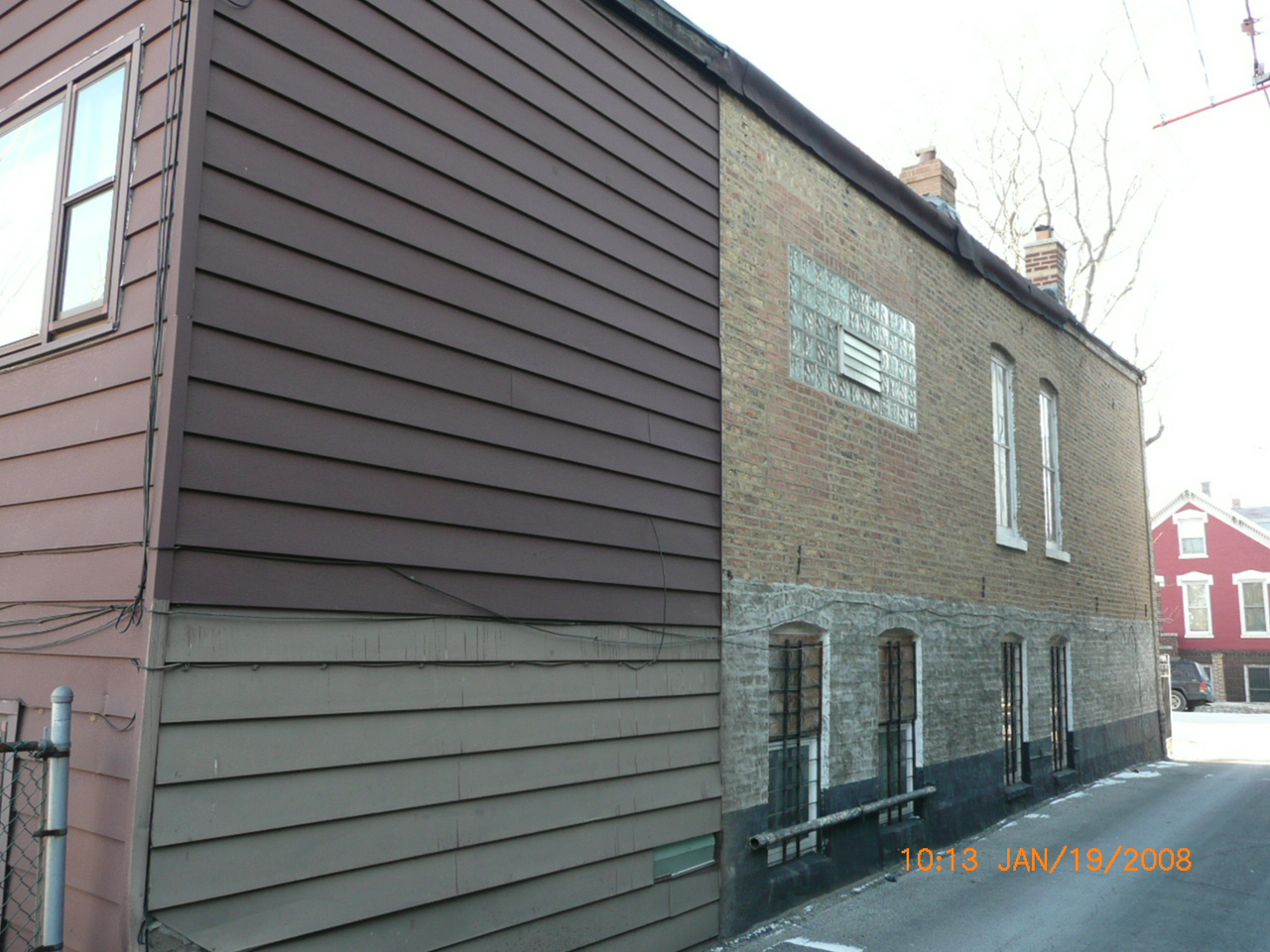
The original south exposure with the wood/aluminum porch.
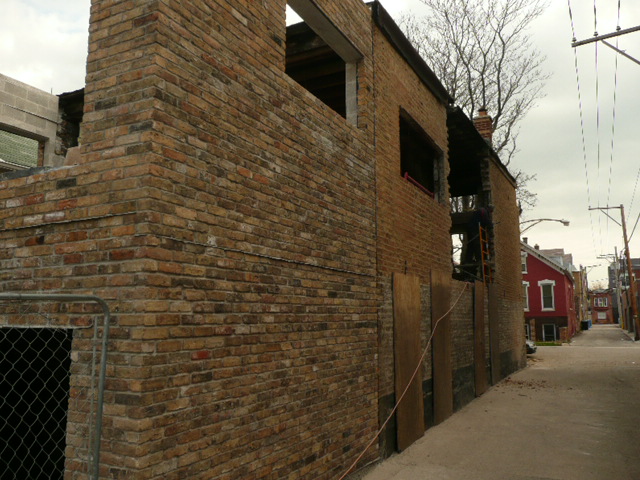
The south exposure with the porch replaced with brick
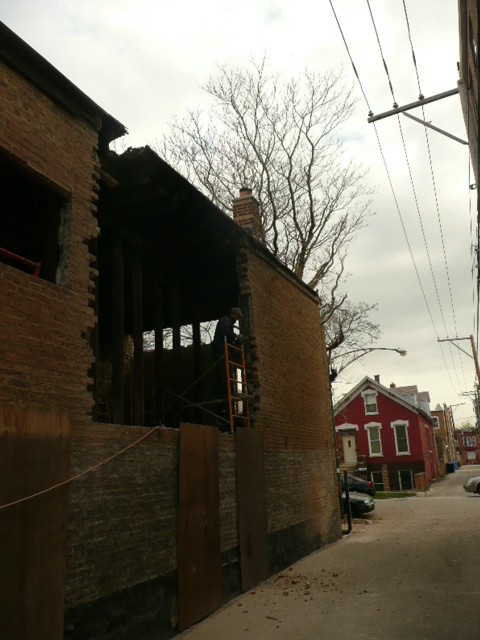
The opening for the new glass curtain wall (remember we still have a whole floor to add)
Leave a Comment » | 1 | Permalink
Posted by elementalbuilding
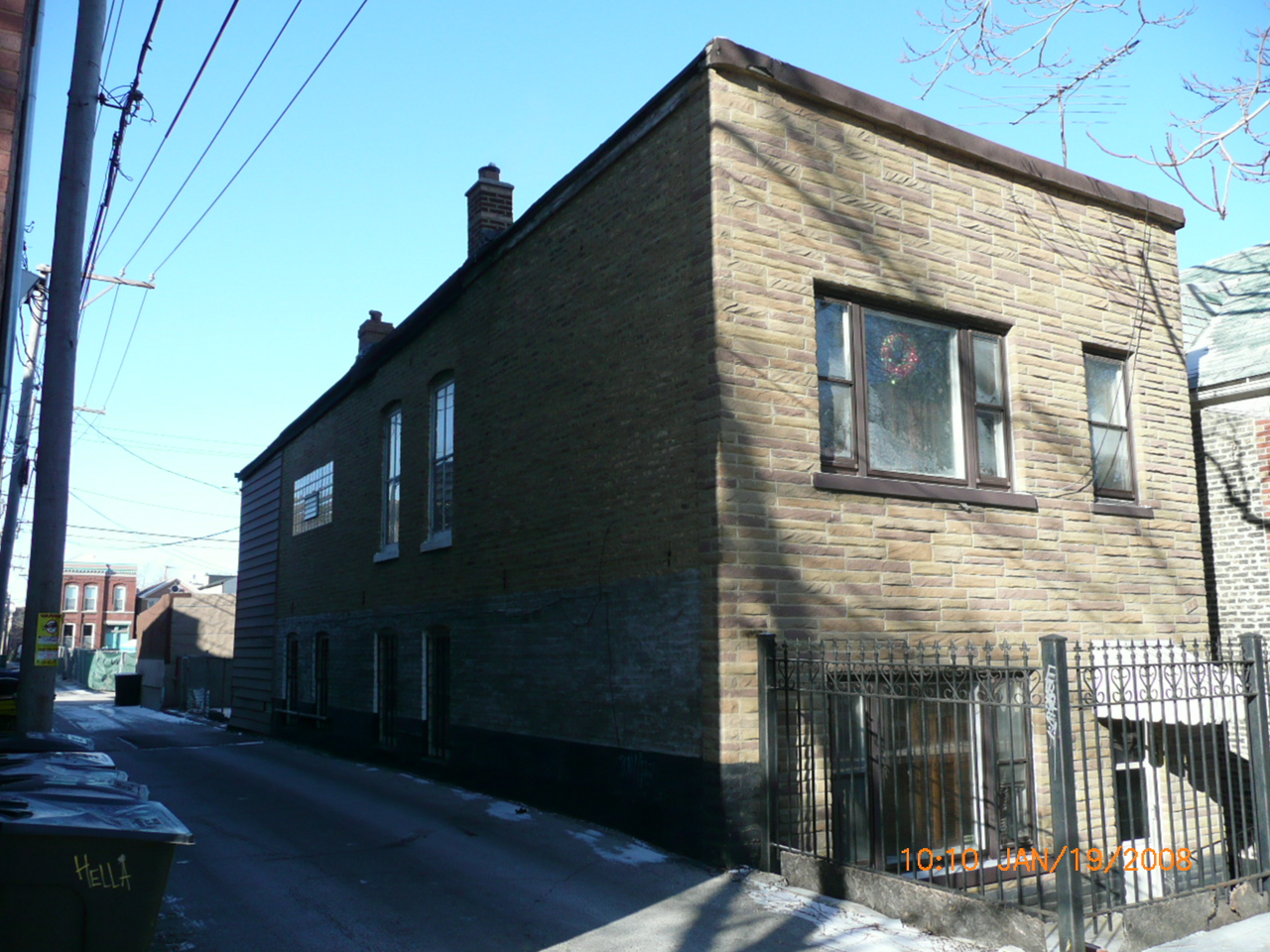
The original facade
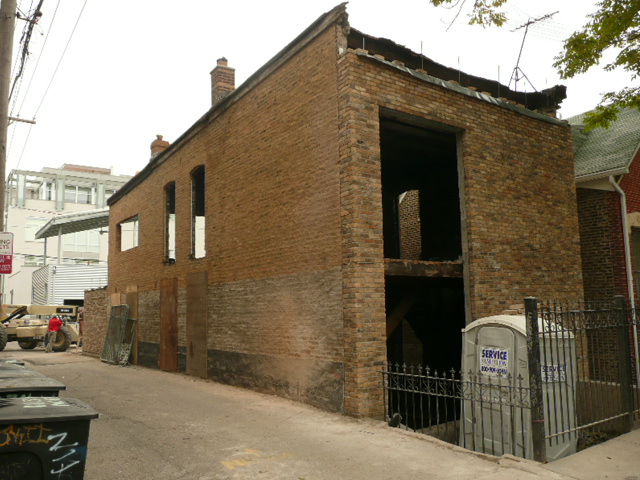
Today's facade

Leave a Comment » | 1 | Permalink
Posted by elementalbuilding
Houses of 100 years ago were built with plaster and lathe board. Eventually plaster, ‘ wet walls’ were replaced with Dry Wall. During the demo of the 1610 home, literally tons of plaster and lathe are removed from the home. The plaster is worthless- even as back fill- it’s basically like sand once it breaks down. 99.99999999% of people would say the same about the lathe board. Though some might grind it into saw dust for animal bedding or others might use it for kindling. Most however send it to a land-fill. We however, we chose the path less taken. We decided to take the very arduous task of turning the lath into laminated lumber. Despite the exhaustive work, we are quite happy with the results and hope you are too!
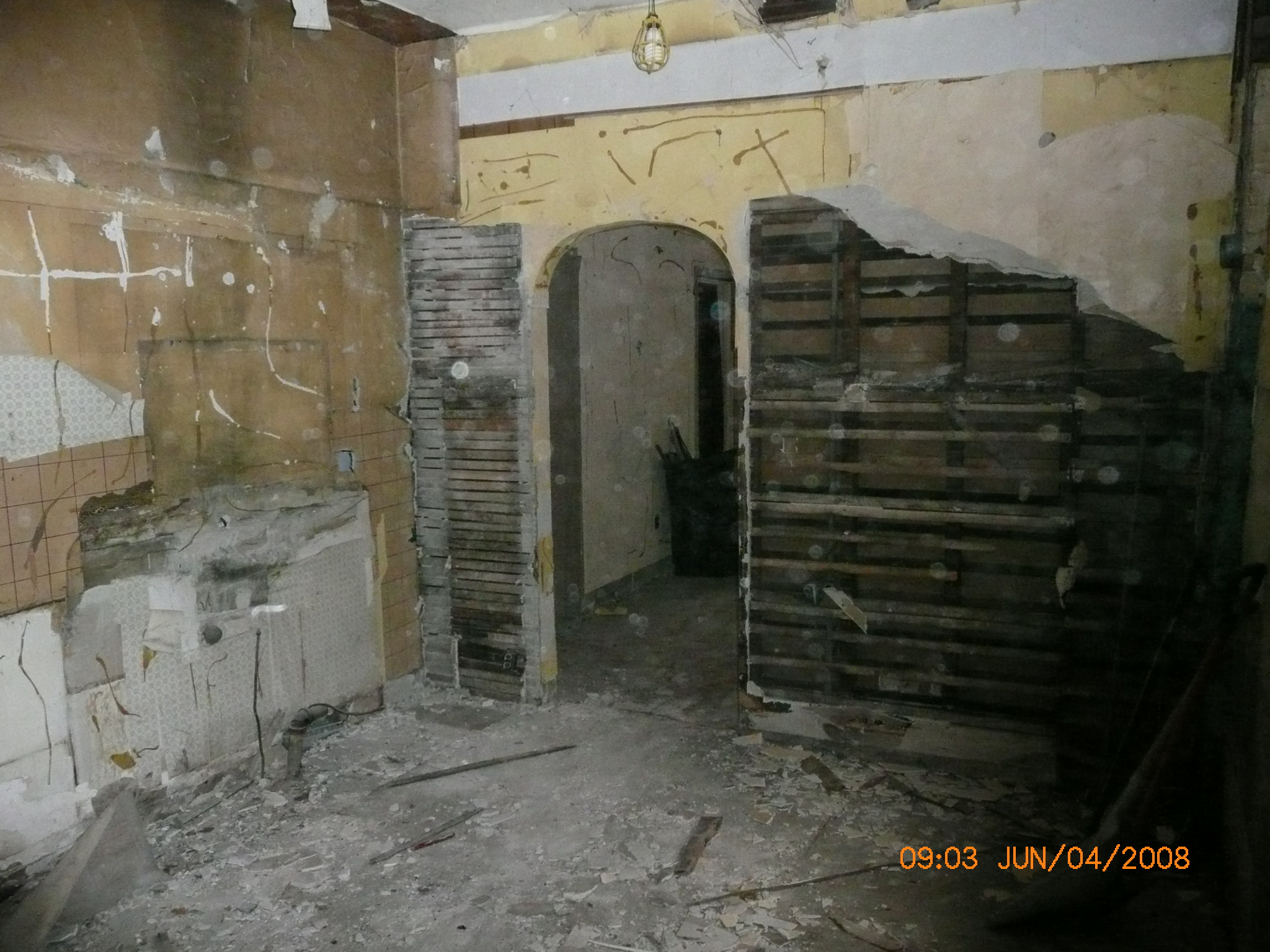
Plaster hanging to pieces of Lathe, mid demo
Once the lathe is removed, it’s piled high in the garage:
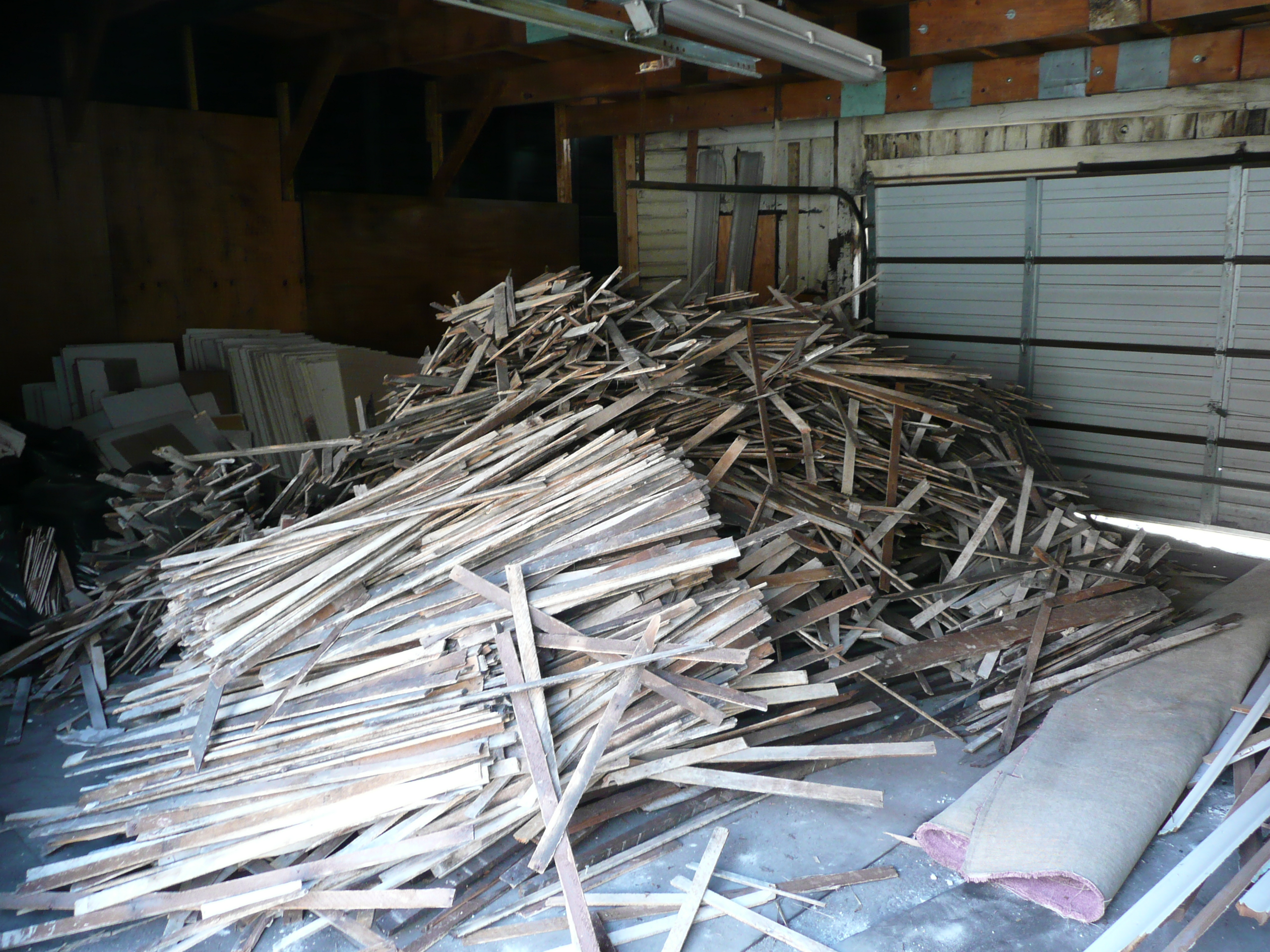
The pile begins
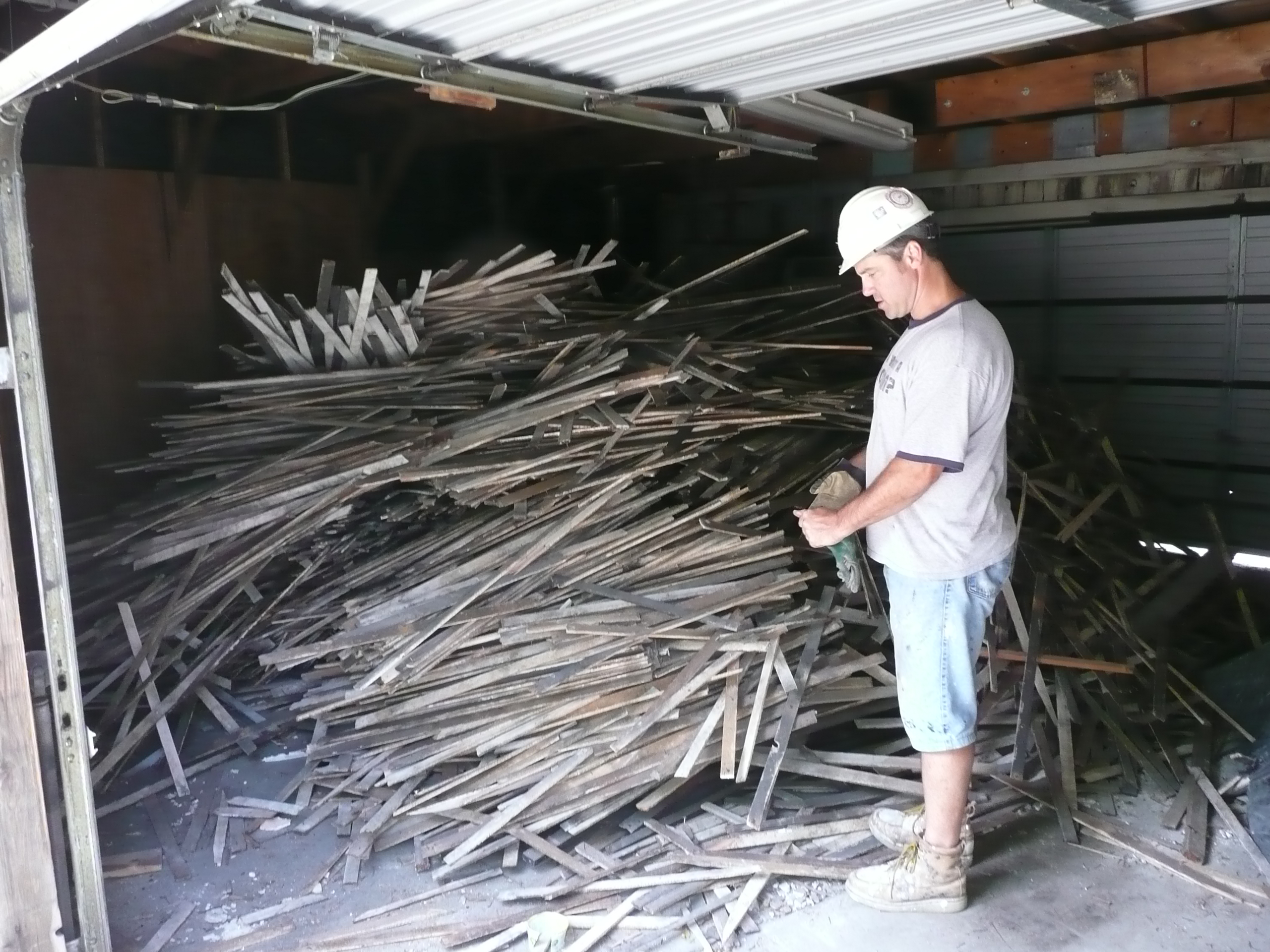
Mike McGowan assesses the growing mountain
Painstakenly each nail is pounded out of the lathe:

Dan Rusk finding his zen moment

Nate Rusk, after a hard day of pulling nails
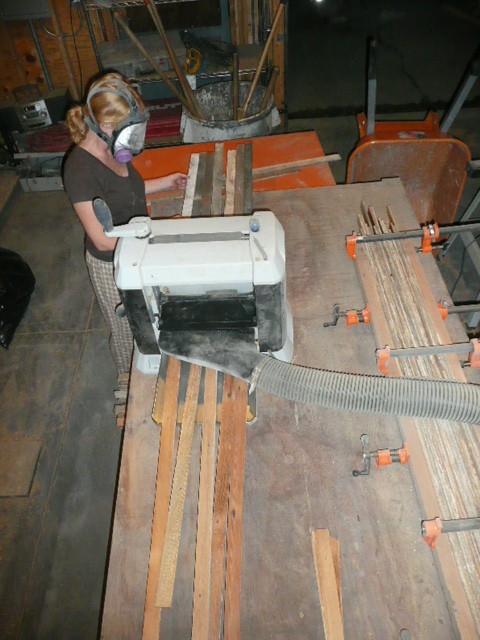
Pegger, planing the lathe.
Once planed, the lathe is glued into 6 inch wide, 9 ft long planks.
Then the planks are planed once again.
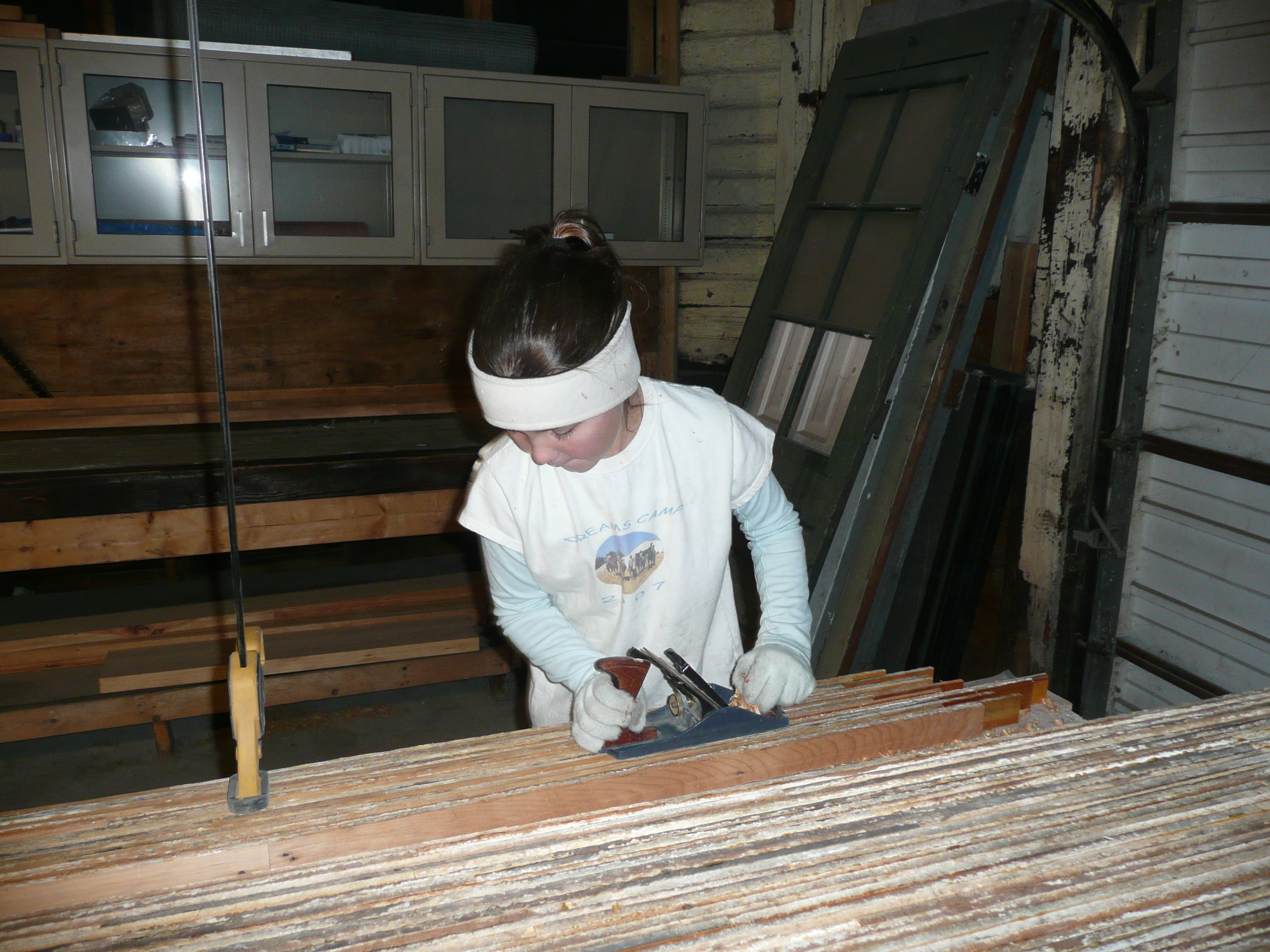
Katers, hand planing the planks
And after a final pass through the electric planer, we have the final product:
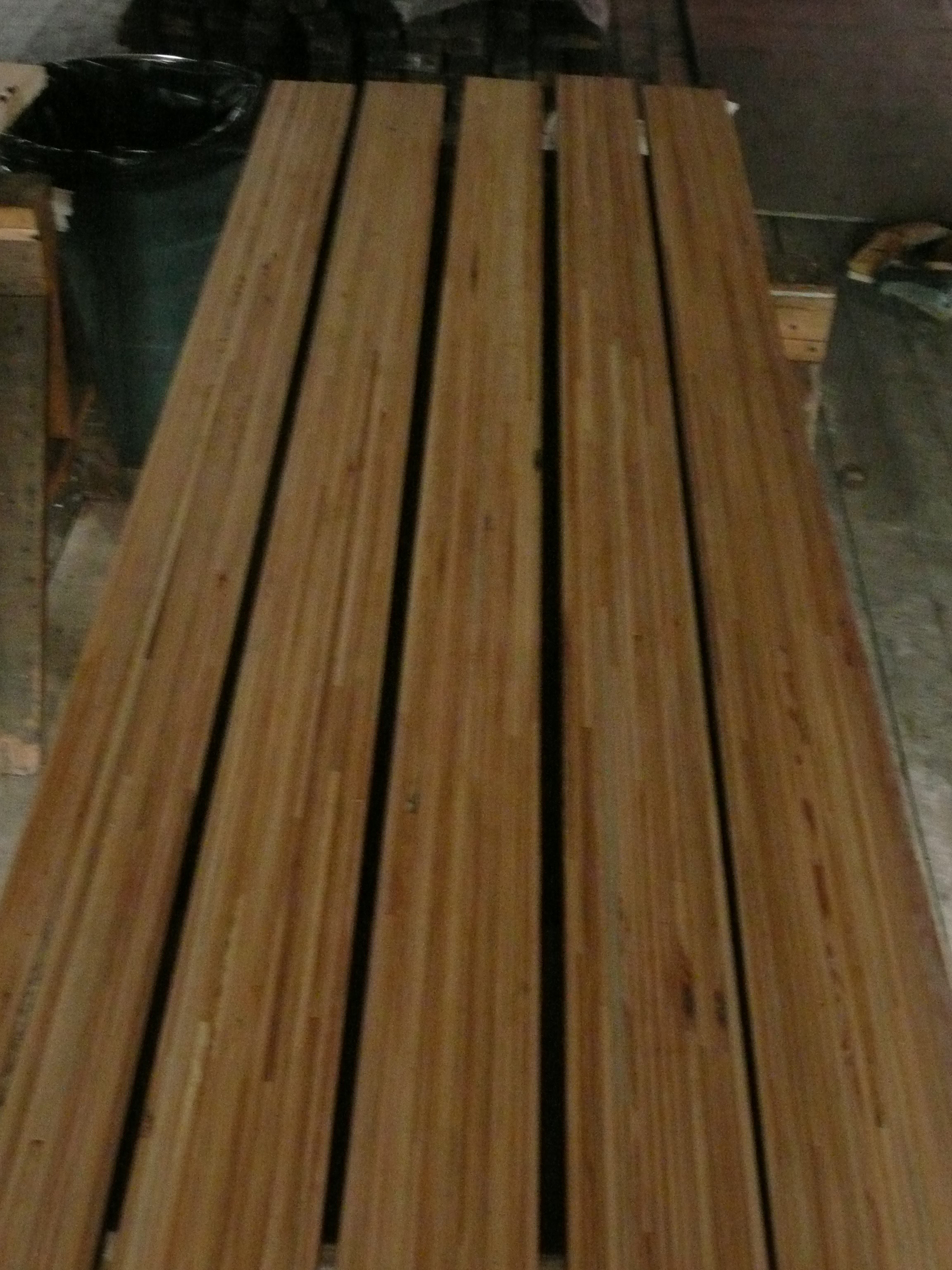
Finished Planks
And somehow after many hours of manual labor, and electricity generated from the sun,
This,
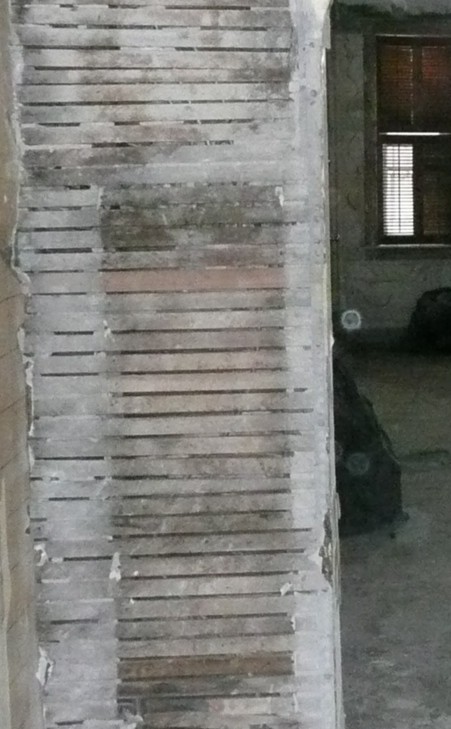
Lathe on the wall
Becomes this:
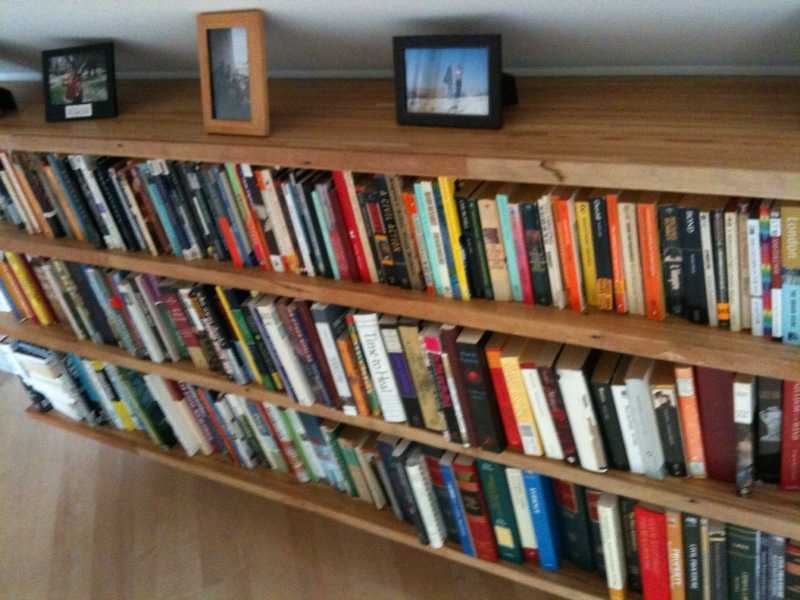
Finished Book Shelves
3 Comments | 1 | Permalink
Posted by elementalbuilding
 Elementalbuilding